WithinTech Learn
The learning core of an e-learning platform: gated course progression, quizzes, and automated engagement.
- Next.js
- Express.js
Scope, stated upfront
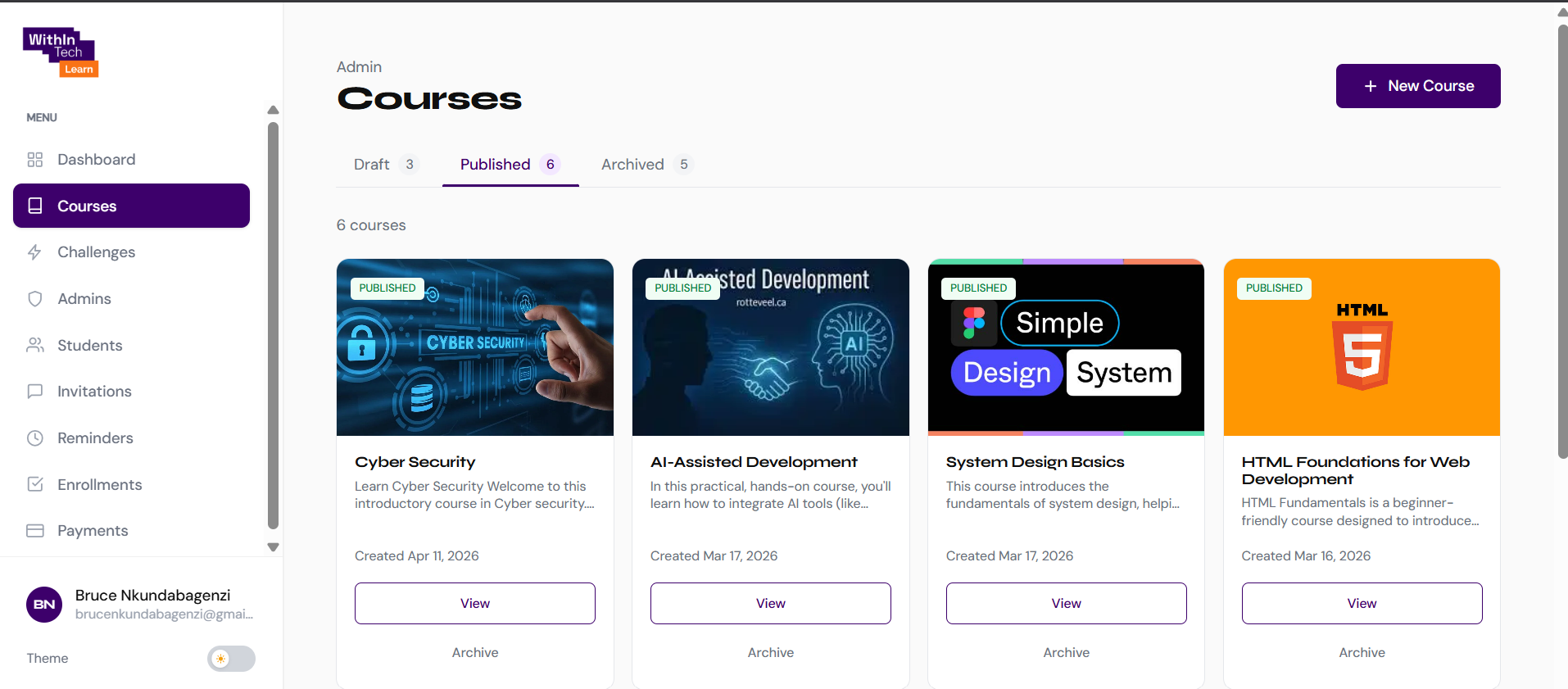
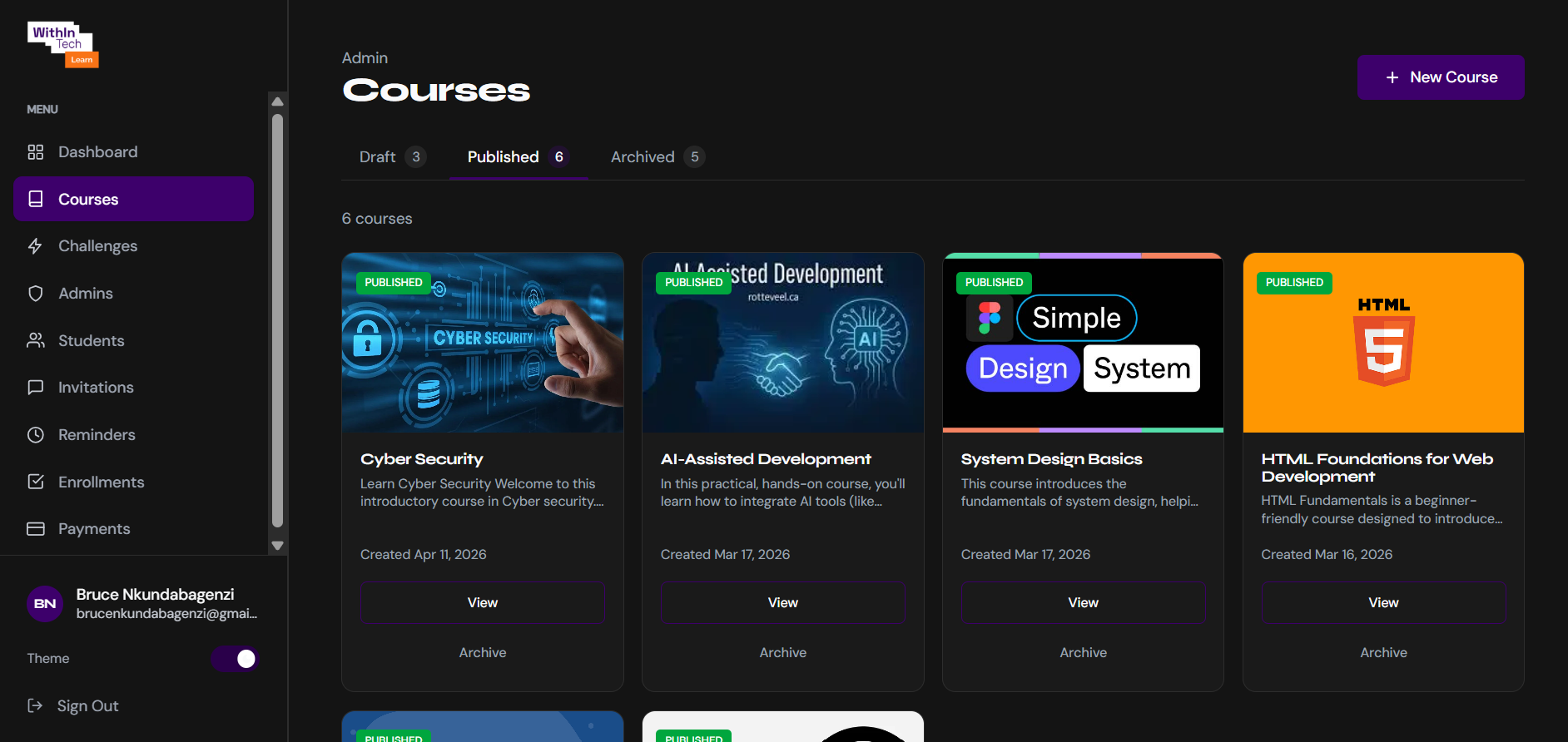
WithinTech Learn already had a working code-execution engine, a set of coding challenges, and user authentication when I joined a three-person distributed team building on top of it — one developer in the US, two of us in Rwanda, working async with no meaningful overlap in working hours. None of that predates-me infrastructure is mine, and none of it appears below. What I built is the learning experience wrapped around it: the course structure, the progression logic that gates it, the quizzes, the automated engagement that brings students back, French and Kinyarwanda translation, and a dark theme.
The problem
A platform with real content and a real audience still needs the layer that turns content into a course: something that gates a student's progress instead of leaving every module open at once, assesses whether a module actually landed before letting a student move on, and reaches back out to students who signed up and then went quiet. None of that existed yet. The platform also shipped in English only, in a region where French and Kinyarwanda are both first languages for a meaningful share of the audience, and it had no dark theme on a platform aimed at developers who spend hours a day in an editor.
What I built
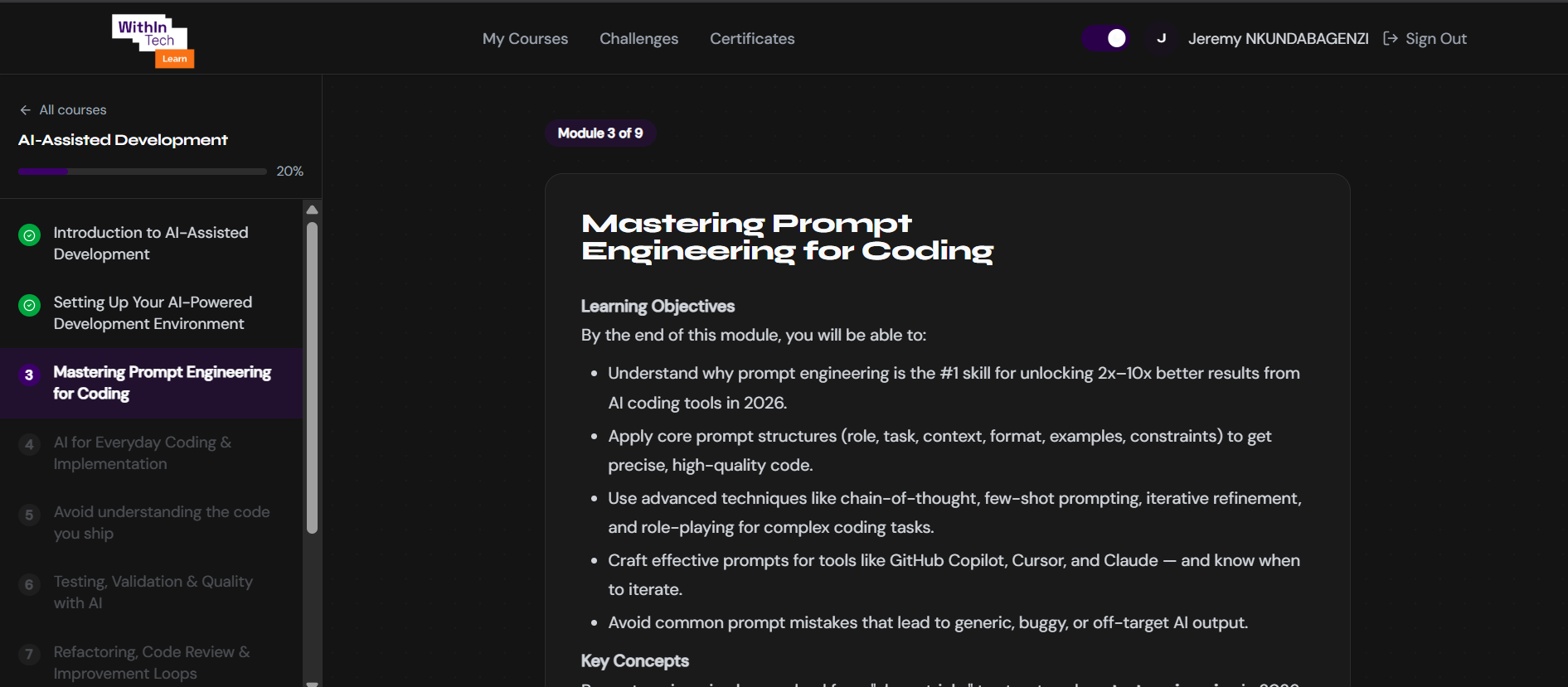
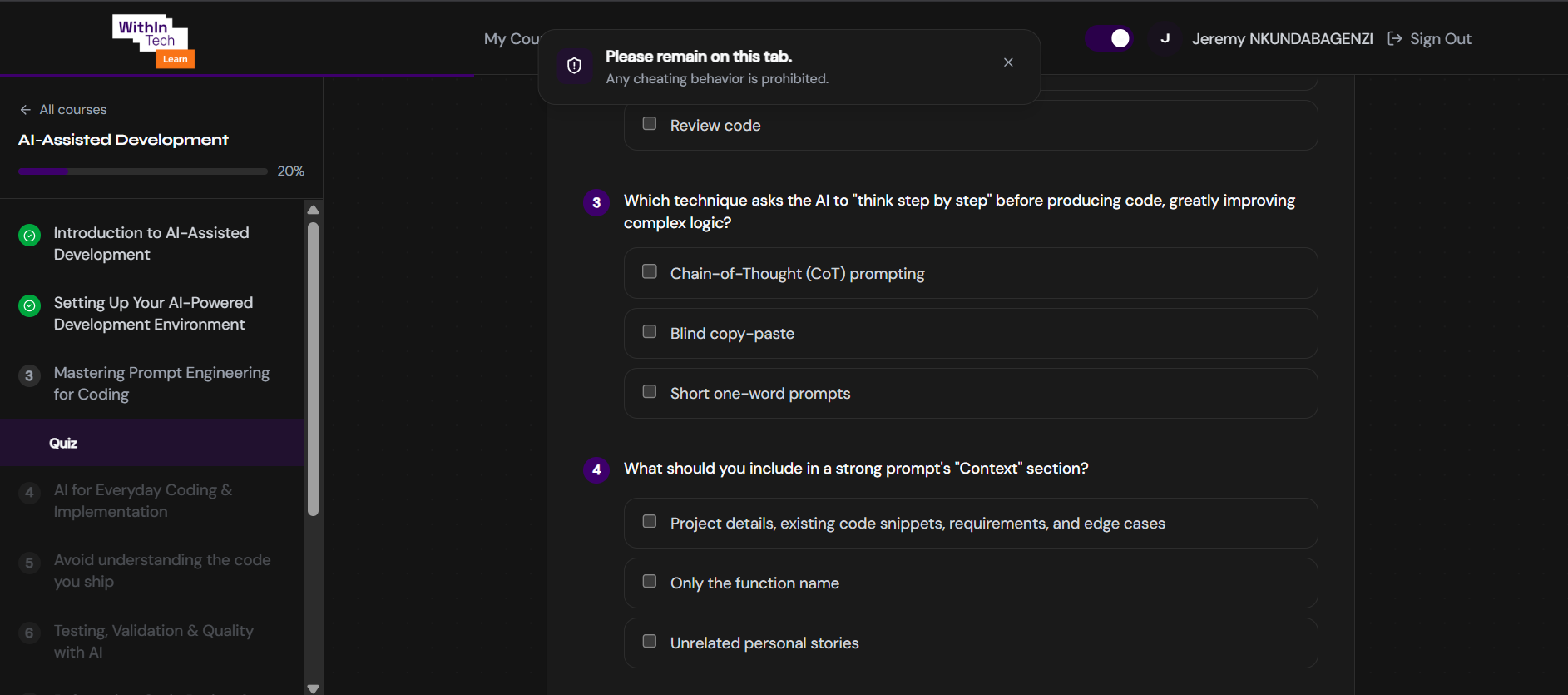
Courses are structured as course → module → sub-module, each sub-module gated behind the completion of the one before it, with a quiz at the end of a module standing as the actual gate rather than a formality — a student who hasn't passed the quiz hasn't unlocked what comes next. The quiz system itself is mine: question types, scoring, and the pass threshold that progression reads from. On top of that, automated email engagement keeps students moving without anyone sending emails by hand — an invitation when a student is added to the platform, reminders for students who've stalled, and a reward notification for top performers on a course. I introduced French and Kinyarwanda translation into an app that had only ever shipped in English, and built the dark theme the platform didn't have.
Subscription payments run through a local fintech partner I sourced and did the initial integration and configuration for; a teammate wrote the payment implementation itself, so I don't claim that part beyond having set the connection up.
Gated progression and progress computation
The hard part of gated progression isn't the locking — a locked module is a single boolean. It's keeping a student's computed progress consistent with what the UI shows once the hierarchy has three levels and students don't always move through it in a straight line: a student can pass a quiz, retake it anyway, jump back to an earlier module to review, or have a sub-module that was unlocked and then re-locked by a later change to the course. If progress is cached or computed in more than one place, those places drift, and a drifted progress bar is the kind of bug a student notices immediately and a support ticket you can't easily reproduce.
The design I settled on treats completion as the only source of truth: a record per student per sub-module marking it done, and a record per student per quiz marking a pass, each written once and updated in place rather than duplicated on a retake. Everything downstream — whether a sub-module is unlocked, a module's percentage complete, a course's overall progress — is computed from those records at read time rather than stored as a separate cached number, so there's exactly one place that can be wrong instead of two that can disagree. A retaken quiz overwrites its own pass record rather than inserting a second one, which matters because "did they pass" needs to stay a single fact per student per quiz, not a growing list a query has to reduce correctly every time it's read.
What I'd do differently
I'd design the translation layer around message keys from the start rather than introducing i18n after the app already had a year of hardcoded English strings scattered through components. Retrofitting it meant a slow, careful pass through the whole UI to find every string that needed a key, and a chunk of that time would have been free if the project had started with next-i18next in place instead of bolted on.
Screenshots